
Stories-to-Reels Funnel Design on Instagram
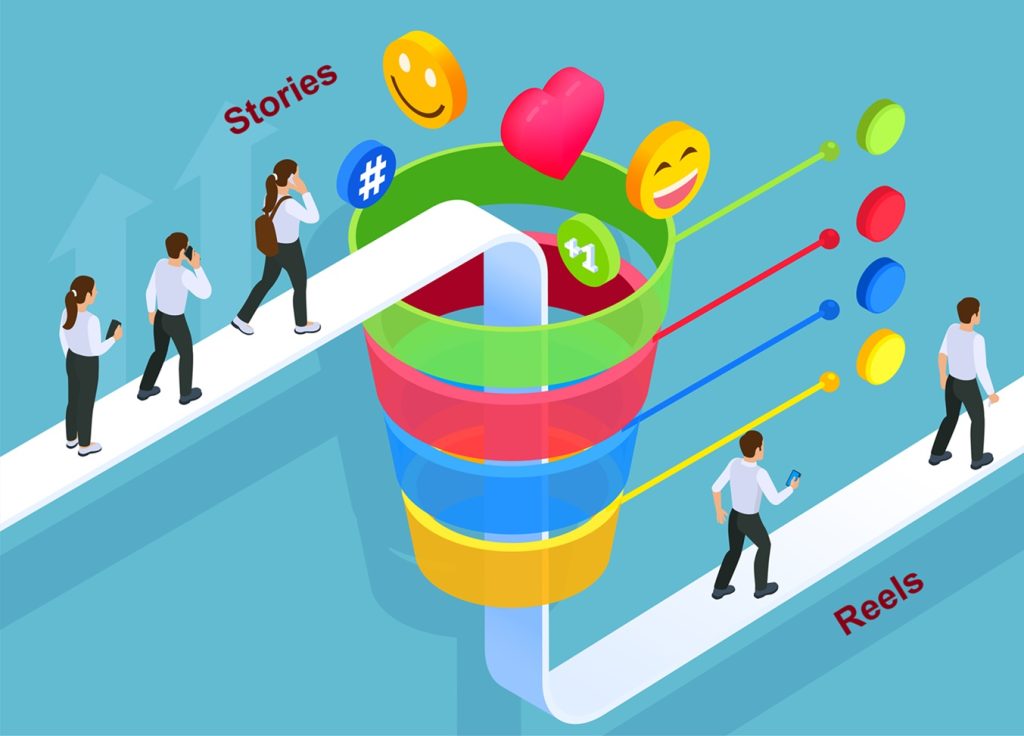
Most creators treat Stories and Reels as separate content channels. They post a Reel to reach new audiences, then post Stories for their existing followers, and never connect the two deliberately. But that separation leaves significant growth potential untapped. Funnel design on Instagram changes this by treating Stories and Reels as two linked stages of a single audience journey. When you connect them intentionally, each format amplifies the other. Reels bring in new eyes. Stories convert those new eyes into loyal, engaged followers. Together, they form one of the most effective organic growth systems available to creators on the platform today.
What Stories-to-Reels Funnel Design on Instagram Actually Is
Funnel design on Instagram—specifically the Stories-to-Reels approach—is a content architecture strategy. It means designing your Reels and Stories not as standalone posts but as connected stages in a deliberate sequence. A Reel serves as the top of the funnel. It reaches people who don’t yet follow you, delivers immediate value, and creates enough curiosity or trust that a viewer wants more. Stories post serve as the middle and bottom of the funnel. They deepen the relationship, deliver additional context, and move followers toward a specific action. When both stages are designed with the other in mind, the funnel works as a cohesive system rather than two disconnected content types.
Why the sequence matters
The sequence matters because audience behavior on Instagram is deeply tied to format. People discover through Reels. They bond through Stories post. These aren’t interchangeable behaviors—they reflect fundamentally different modes of engagement. Reels are consumed passively, often by people who don’t know you yet. Stories post are consumed actively, by people who already care enough to tap through your content intentionally. Funnel design on Instagram respects this behavioral difference by using each format for what it does best. When you try to do everything in one format—or use both formats without connecting them—you miss the natural audience progression that the platform’s own design already encourages and supports.
The role of intent in funnel design
Intent is what separates a funnel from a random collection of content. A well-designed Stories-to-Reels funnel starts with a clear destination in mind. What do you want a new viewer to do after watching your Reel? Follow you. What do you want a new follower to do after watching your Stories post? Trust you enough to save your content, reply to a poll, click a link, or make a purchase. Every piece of content in the funnel should serve one of those destinations explicitly. When intent is clear from the beginning, your content decisions become far more focused—and your funnel design on Instagram becomes far more effective at moving people from strangers to engaged community members.
How to Design the Reels Stage of Your Funnels on Instagram
The Reels stage of your funnels on Instagram has one primary job: to earn attention from people who don’t follow you yet and give them a compelling reason to want more. This means your Reels need to deliver genuine, immediate value within the first two to three seconds. The hook must be strong enough to stop the scroll. The content must be good enough to hold attention through to the end. And the final moment of the Reel must create enough curiosity or goodwill that the viewer’s natural next step is to tap your profile or hit follow. Every element of the Reel should serve that progression deliberately and efficiently.
Designing Reels with the funnel in mind
Most creators design Reels to perform well as standalone content—and that’s not wrong. But funnel design on Instagram adds an additional layer of intentionality. Your Reel should tease a continuation that only exists in your Stories or on your profile. This doesn’t mean withholding value from the Reel itself—it means planting a seed. You might end a Reel with a question your Stories will answer. Or, you might reference a resource your profile bio links to. You might introduce a concept your Stories series explores in more depth. This tease creates a natural pull toward the next stage of the funnel without feeling manipulative or artificially cliffhanger-driven in a way that frustrates viewers.
Choosing the right Reels topics for funnel entry
Not every Reel topic works equally well as a funnel entry point. The best funnel-entry Reels address a specific, high-interest problem or question within your niche. They attract viewers who are already interested in what you offer—not just anyone who happens to be scrolling. A broadly entertaining Reel might reach millions of people, but if those people aren’t interested in your niche, they won’t convert into engaged followers who continue through your funnel. Therefore, choose Reels topics that are highly relevant to your ideal follower’s specific interests and challenges. Targeted reach converts far better than broad reach when your goal is funnel design on Instagram rather than pure vanity metrics.
How to Design the Stories Stage of Your Funnels on Instagram
Once a new viewer follows you after watching a Reel, your Stories become the primary relationship-building tool. The Stories stage of your funnels on Instagram should feel like a natural continuation of the experience the Reel began. If your Reel introduced a problem, your Stories post can walk through the solution in more depth. If your Reel delivered a quick tip, your Stories post can share the story behind it, add nuance, or invite followers to share their own experience. This continuation creates a sense of narrative momentum—the feeling that following you means being part of an ongoing conversation rather than consuming isolated pieces of content with no connection between them.
Using Stories features to deepen engagement
Stories offer interactive features that Reels don’t—polls, question boxes, sliders, quizzes, and countdown timers. These features are extraordinarily valuable in funnel design on Instagram because they transform passive viewers into active participants. A poll asks followers to weigh in. A question box invites them to share their situation. A quiz tests their knowledge and positions you as an educator. Each interaction deepens the follower’s sense of connection and investment in your account. Furthermore, every interaction also sends a positive engagement signal to Instagram’s algorithm, which increases the likelihood that your future Stories—and your future Reels—will be shown to that follower again, keeping the funnel active and cycling continuously.
Structuring your Stories sequence
A well-designed Stories sequence isn’t a random stream of daily moments. It’s a structured mini-journey with a clear beginning, middle, and end. The first Stories post in the sequence should acknowledge or continue the Reel that brought new followers in. The middle Stories should deliver depth, personality, and value that justifies the follow. The final Stories post in the sequence should include a clear, low-friction call to action—a poll to vote on, a question to answer, a link to tap, or simply an invitation to reply. This structure ensures that every Stories sequence moves followers further along the funnel rather than leaving them engaged but directionless at the end of your content for that day or that week.
Connecting the Two Stages of Your Funnel Design on Instagram
The connection between your Reels and Stories stages is where the funnel’s real power lives. This connection needs to be both explicit and implicit. Explicitly, you can reference your Stories posts in your Reels—telling viewers directly that you’re going deeper on this topic in your Stories posts today. You can also use your Stories posts to reference recent Reels, creating a feedback loop that rewards followers who consume both formats. Implicitly, your Reels and Stories should share a consistent voice, aesthetic, and thematic focus so that moving from one to the other feels seamless rather than jarring. Consistency of experience is what makes the transition feel like a natural next step rather than a content context switch.
Timing your Reels and Stories strategically
Timing plays a significant role in effective funnel design on Instagram. Ideally, you post a Stories sequence on the same day as—or within twenty-four hours of—a new Reel. This timing ensures that new followers who arrive from the Reel encounter an active, engaging Stories presence immediately rather than a dormant account with nothing recent to explore. When a new follower taps your profile after watching a Reel and finds no recent Stories posts, the funnel stalls. The momentum the Reel created dissipates. But when they find fresh, relevant Stories waiting—content that feels like a natural continuation of what drew them in—the funnel flows and the relationship deepens quickly and naturally.
Using Highlights to extend the funnel
Stories Highlights extend the funnel’s lifespan beyond the standard twenty-four-hour Stories window. Well-organized Highlights act as an evergreen middle stage of your funnels on Instagram—available to new followers any time they visit your profile, not just in the twenty-four hours after a Reel goes live. Design your Highlights with funnel intent. Create a Highlight that introduces who you are and what you offer. Then, create another that showcases your most valuable educational content. Create a third that houses social proof or testimonials. New followers who arrive from a Reel weeks after it was posted can still move through a meaningful funnel experience via your Highlights, making your overall system far more durable and continuously effective.
Common Mistakes in Stories-to-Reels Funnel Design
The most common mistake in Stories-to-Reels funnel design is treating the two formats as independent rather than connected. Creators post strong Reels that generate follows, then post Stories that have nothing to do with the Reel’s topic or the promise it made. New followers arrive primed for one type of content and find something completely unrelated. The disconnect breaks the funnel immediately. To avoid this, plan your Reels and Stories together rather than separately. When you script or outline a Reel, simultaneously plan the Stories sequence that will follow it. This parallel planning habit is the single most effective way to maintain funnel coherence across both formats consistently.
Overloading the call to action
Another frequent mistake is including too many calls to action within the funnel—asking followers to follow, save, share, click a link, reply to a poll, and send a DM all within the same sequence. This overload creates decision paralysis. Followers who aren’t sure which action to take often take none at all. Effective funnel design on Instagram uses one primary call to action per stage. The Reel’s call to action is to follow or visit the profile. The Stories posts’ call to action is one specific next step—a reply, a poll vote, or a link tap. Keeping each stage focused on a single action dramatically increases the conversion rate at each point in the funnel.
Neglecting the warm audience already in the funnel
Finally, many creators focus so heavily on attracting new viewers through Reels that they neglect the warm audience already following them—the people who are already in the funnel but haven’t yet converted into buyers, clients, or highly engaged community members. Stories-to-Reels funnel design on Instagram should serve both audiences simultaneously. Your Reels attract new followers. Your Stories posts nurture both new followers and existing ones who need more time or more touchpoints before they’re ready to act. Neglecting the warm audience means your funnel leaks—people enter at the top but drift away before they reach the bottom, because your Stories aren’t consistently giving them a reason to stay deeply engaged with your account.
Making Your Funnel Design on Instagram a Sustainable System
The most effective funnels on Instagram aren’t one-time campaigns—they’re ongoing systems built into your regular content workflow. To make your Stories-to-Reels funnel sustainable, treat it as a repeating cycle rather than a linear sequence with a defined end. Each Reel starts a new cycle and each Stories sequence continues it. Each Highlight preserves it for future visitors. Over time, this cycle compounds. Your Reels library keeps generating new followers long after the original post date. In addition, your Highlights keep funneling profile visitors through a meaningful journey. Your Stories posts keep deepening relationships with followers at every stage of their journey with your brand. The system keeps working even when you aren’t actively creating new content.
Building funnel templates for efficiency
To sustain your funnel without burning out, build reusable templates for both stages. A Reels template might be a consistent hook structure, a defined content format, and a standard closing line that invites further engagement. A Stories template might be a reliable three-to-five slide sequence—an opening context slide, two or three value slides, and a closing call-to-action slide. These templates don’t make your content feel robotic. They free your creative energy for the content itself rather than the structure around it. Funnel design on Instagram becomes dramatically more sustainable when the architecture is templated and the creativity fills in the framework rather than rebuilding the framework from scratch every single time.
Measuring funnel effectiveness over time
Finally, measure your funnel’s performance at each stage separately. For the Reels stage, track non-follower reach, profile visits, and follow rate per Reel. In addition, for the Stories stage, track completion rate, interaction rate on interactive elements, and link tap rate if applicable. For Highlights, track views from non-followers as a proxy for evergreen funnel activity. These metrics together give you a clear picture of where your funnels on Instagram are performing well and where they’re losing people. A high Reels reach but low follow rate suggests your Reel isn’t creating enough pull toward your profile. A high follow rate but low Stories engagement suggests your Stories posts aren’t delivering on the promise your Reel made. Each insight points directly to where your next optimization effort should focus.
VerifiedBlu is a great resource for growing your Instagram followers organically and authentically. Contact us to talk about how we can help.
