
Dealing With Second-screen Behavior on Instagram
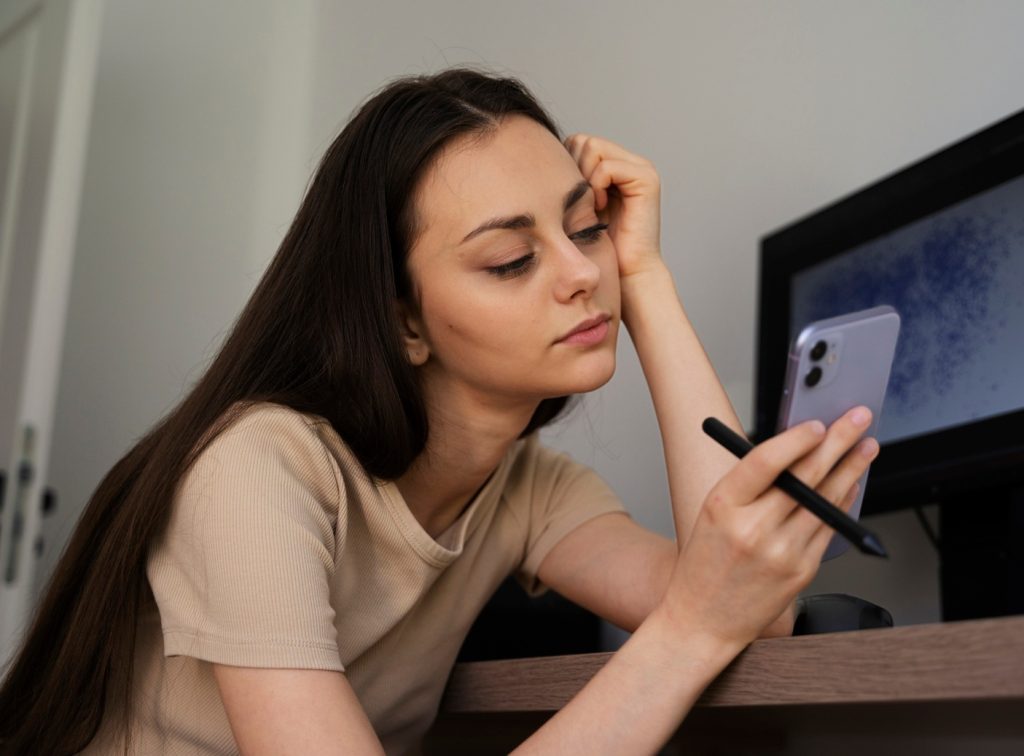
Anyone who has scrolled through Instagram while watching television knows exactly what second-screen behavior feels like. You’re present in two places at once, giving full attention to neither. For creators, that divided attention is one of the most underappreciated obstacles to consistent engagement and sustainable growth. Second-screen behavior on Instagram describes the habit of using the app simultaneously alongside another screen. That other screen might be a television, a laptop, or any device competing for the same attention. Understanding how that habit shapes your audience’s experience is essential to designing posts that break through distraction. Only then can your content earn a genuine response.
What is Second-screen Behavior on Instagram?
Second-screen behavior isn’t a new phenomenon, but its implications for Instagram creators are rarely discussed with enough specificity. The term describes the widespread habit of using a smartphone—and by extension, Instagram—while simultaneously engaging with another screen. That other screen is most commonly a television. However, it also includes laptops, tablets, and multiple devices used in parallel during work or leisure time. The behavior is so normalized that most users don’t register it as divided attention at all. They simply experience it as their default mode of media consumption. That makes it a structural feature of the environment your content enters every single time you post.
How Widespread the Habit Really Is
The scale of second-screen behavior is significant. Creators can’t reasonably assume their content is being watched with undivided attention. Research consistently shows that a substantial majority of smartphone users engage with multiple devices. The most frequent are while watching television or working on another screen. That means a significant portion of your audience encounters your Reels, Carousels, and Stories while their cognitive resources are already partially allocated elsewhere. Second-screen behavior on Instagram isn’t an edge case affecting a small minority of your followers. It’s the default context for a large share of content consumption happening across the platform at any given moment of the day.
Why Creators Tend to Underestimate It
Creators typically produce content under conditions of focused attention. They review footage carefully, refine captions, and make deliberate creative decisions in a controlled environment. That production context creates a natural bias toward assuming the audience will engage with similar focus and care. In reality, the gap between production context and consumption context is wide and consequential. When you craft a Reel that rewards close attention, you’re implicitly assuming an audience that has close attention to give. Second-screen behavior on Instagram means that assumption is wrong for a large portion of your audience. Content that doesn’t account for that reality will consistently underperform its actual potential reach and impact.
How Second-screen Behavior Affects Engagement
Second-screen behavior on Instagram affects engagement in a variety of ways. The most direct is by reducing the likelihood that any individual piece of content will be fully consumed. A viewer who is half-watching television and half-scrolling their feed is far less likely to watch a Reel to completion. They’re also less likely to read a full caption or pause long enough to save or share a post. Each of those incomplete interactions represents a missed engagement signal. That’s a signal the algorithm would have counted in your favor under conditions of genuine focused attention. At scale, the cumulative effect on your engagement rate and algorithmic distribution can be substantial and difficult to reverse.
The Effect on Watch Time and Completion Rates
Watch time and completion rate are among the most heavily weighted signals in Instagram’s Reels algorithm. Both are directly vulnerable to second-screen behavior. Viewers who split their attention between your Reel and a television program are unlikely to watch more than a few seconds. That’s true unless something in those opening moments forcefully captures their focus. Second-screen behavior therefore creates a specific and demanding threshold your content needs to clear in its very first moments. It isn’t just about performing well algorithmically. It’s about being seen at all by a viewer whose cognitive bandwidth is already claimed by multiple competing screens and stimuli.
The Effect on Saves and Shares
Saves and shares require a level of intentionality that divided attention tends to suppress. When a viewer is genuinely absorbed in your content, the decision to save or share it feels natural and immediate. When that same viewer is managing their attention across multiple screens, the cognitive overhead of even a simple action becomes too much. Tapping the save icon or sending a post to a friend is enough friction to make them skip it entirely and keep scrolling. Second-screen behavior on Instagram systematically suppresses the highest-value engagement signals your content can generate. Those are precisely the signals that extend your reach and contribute most directly to meaningful long-term growth on the platform.
Designing Content That Cuts Through Attention Divided Between Multiple Devices
The most effective response to second-screen behavior on Instagram isn’t to wish your audience were more focused. It’s to design content that performs well even under conditions of divided attention. That means front-loading impact and making your content visually and audibly arresting from the very first frame. It also means structuring your posts so that the core value is accessible to someone giving only partial attention. Creators who consistently design with distraction in mind build content that outperforms in real-world consumption conditions. That’s a far more durable advantage than optimizing for the idealized scenario of a single viewer giving a post their complete and undivided focus.
Front-loading Your Core Message
There are various structural adjustments you can make. The most important is to move your most important or surprising element to the very beginning of your content. Don’t build toward it gradually—lead with it. A Reel that spends its first five seconds establishing context before delivering value will lose a large portion of its divided-attention audience before the payoff arrives. Second-screen behavior on Instagram demands that you treat the opening moment of every post as your only guaranteed opportunity to affect engagement with that viewer. If the first frame doesn’t give them a compelling reason to redirect their attention to your content, most of them simply won’t make that shift at all.
Using Captions and Text Overlays Strategically
Captions and on-screen text are particularly valuable tools for reaching second-screen audiences. They allow your content to communicate meaningfully even when audio isn’t being actively heard. A viewer whose primary attention is on a television program may have their phone’s sound off. They may simply not register your audio in the noise of competing media. Text overlays that carry your core message independently of the audio track give that viewer a genuine path to engage with your content. They don’t need to redirect their auditory attention away from the other screen. Second-screen behavior on Instagram makes silent but visually compelling content not just a nice option but a practical necessity for creators.
Adjusting Your Content Strategy for a Distracted Audience
Designing individual posts for divided attention is necessary, but it isn’t sufficient on its own. You also need to think at the level of your overall content approach. Consider how you sequence posts, how you build habits in your audience, and how you create content experiences that train followers to give you more focused attention over time. A distracted audience isn’t a fixed condition you simply have to accept and work around indefinitely. It’s a starting point you can actively and strategically influence. Deliberate and consistent content design choices, made over an extended period of time, are the most reliable way to shift that dynamic in your favor.
Building Habitual Viewing Through Consistency
Strive to build a strong content habit in your audience. It’s one of the most effective long-term strategies for counteracting second-screen behavior. When that habit is in place, followers begin to seek out your posts rather than simply encountering them passively while scrolling. A follower who actively looks for your content opens the app with the specific intention of seeing what you’ve posted. That person is far more likely to give it genuine focused attention than a passive scroller. Second-screen behavior on Instagram is most damaging to creators whose audience has no strong habitual relationship with their content. Building that habit through reliable posting schedules, consistent value delivery, and recognizable content formats is one of the most durable responses available to you.
Creating Content Worth Pausing For
Ultimately, the most powerful thing you can do to counteract divided attention is to create content that makes your audience want to put down the other screen entirely. That’s a high bar, and it won’t happen with every post. However, it should be the standard you aim for with your most important content. Second-screen behavior on Instagram reflects a real and legitimate competition for attention that you can’t eliminate. But you can win it post by post. Content that’s surprising, immediately useful, emotionally resonant, or visually distinctive enough can override the gravitational pull of whatever else your audience is watching or doing when your content appears in their feed.
Measuring the Impact of Second-screen Behavior on Your Account
Understanding how second-screen behavior on Instagram affects your account requires looking beyond surface-level metrics. You need to pay attention to the patterns that reveal how deeply your audience is actually consuming your content. Reach and impressions tell you how many people your content was served to, but they don’t tell you how attentively it was received. The metrics that reveal attention quality are completion rate, saves, shares, and profile visits generated by a specific post. Together, they give you a much clearer picture of how much of your audience is genuinely absorbing your content versus passively scrolling past it while their attention is elsewhere.
Which Metrics That Affect Engagement to Watch Most Closely
Completion rate is the engagement metric that most directly indicates whether your content is successfully holding attention against the competing pull of other screens and stimuli. See if there’s a consistently low completion rate on Reels you know contain genuinely valuable content. That’s a strong signal that divided attention is costing you engagement before your message lands. Saves are equally revealing. They require enough intentionality to suggest that the viewer was paying real attention at the moment they decided to act. Second-screen behavior on Instagram tends to suppress both of these metrics simultaneously. Tracking them together over time gives you a reliable composite picture of how effectively your content is cutting through a genuinely distracted environment.
Using Insights to Refine Your Approach
Once you’ve identified the metrics most affected by divided attention on your account, you can begin to test targeted adjustments. Use your insights data to evaluate whether those adjustments are making a measurable difference to your results. Try varying the structure of your Reels openings and tracking whether front-loaded versions generate higher completion rates. Test different approaches to on-screen text and caption length to see which formats retain more divided-attention viewers through to the end of the post. Second-screen behavior on Instagram is a real and persistent challenge. However, it responds to deliberate and data-informed creative experimentation conducted consistently over time with a clear sense of what you’re trying to improve and why.
VerifiedBlu can help you grow your Instagram followers organically and authentically. Contact us today.
