
Understanding Instagram Content Formats for Beginners
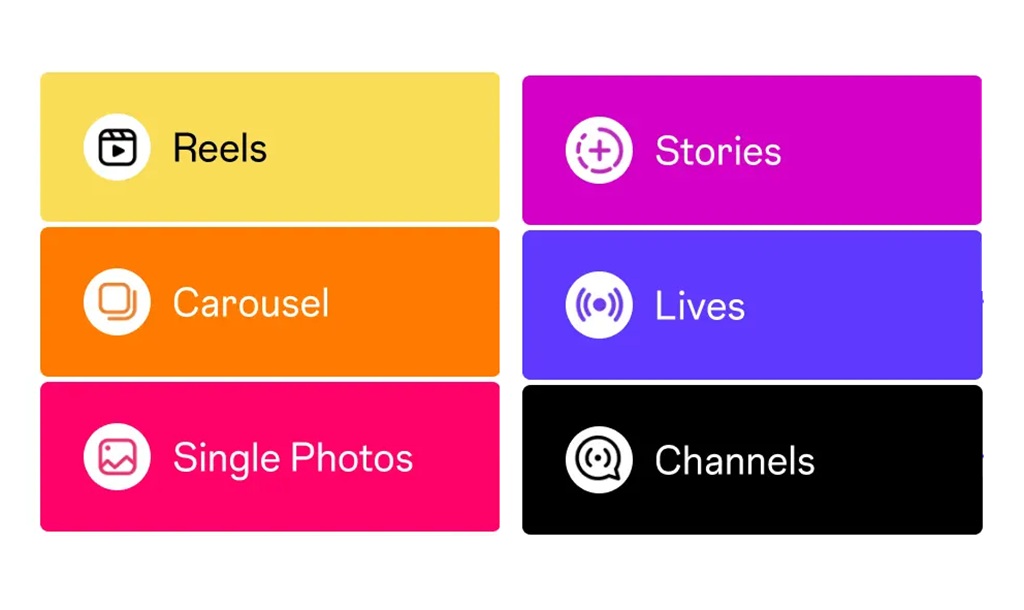
Instagram offers more ways to post than most beginners expect. When you first explore the app, you’ll find photos, short videos, temporary content, and multi-image slideshows. Each behaves differently and serves different purposes. Getting clear on Instagram content formats early saves you from guessing. It also keeps you from defaulting to one type of post out of habit, while leaving more effective options untouched. This guide covers the main formats available and what each one does well. It also explains how to think about using them as a beginner. You don’t need to master all of them at once. But understanding the options helps you make smarter decisions from the start. It also avoids a lot of wasted effort later on.
The Main Social Media Post Types on Instagram
Instagram currently has five main content formats: Reels, Stories, photo posts, Carousel posts, and standard video posts. Each appears differently in the app and reaches your audience through different pathways. Each also tends to perform differently depending on your goals. Before you choose what to post, it helps to understand what each format actually is. Instagram content formats aren’t just stylistic choices—they reflect how Instagram’s algorithm treats different types of content. Some formats are designed primarily for discovery, meaning they reach people who don’t follow you yet. Others are better suited to maintaining the audience you’ve already built.
What the Platform Prioritizes
Instagram’s priorities have shifted considerably in recent years. For a long time, static photo posts were the dominant format. Then the platform began heavily promoting Reels to compete with TikTok. Reels still receive strong algorithmic support for reaching new audiences. However, the platform has also reintroduced support for static posts and Carousels. Some evidence suggests Carousels earn longer engagement time than other social media post types on the platform. Knowing this history helps beginners set realistic expectations. Some formats extend reach; others serve different goals entirely. It’s also worth noting that platform priorities shift, and the format the algorithm favors today may not be the one it favors in a year. Building familiarity with multiple formats puts you in a stronger position when those shifts happen.
Formats vs. Features
It’s worth distinguishing between formats and features. Formats are the types of content you post—Reels, Stories, photos, and Carousels. Features are tools you can layer onto content within those formats: polls, stickers, captions, hashtags. Beginners sometimes confuse the two, particularly with Stories. The interactive features there are so prominent that they can overshadow the format itself. This distinction matters because format decisions affect how content gets distributed. Feature decisions affect how audiences engage once the content has been served. Both matter, but they operate at different levels of the platform. A mistake in format choice affects who sees your content. A mistake in feature choice affects what happens after someone finds it. Keeping these two layers separate makes it easier to diagnose problems.
Reels, Stories, and Carousels Explained
Reels are short-form vertical videos, typically between 15 and 90 seconds. They appear in the dedicated Reels tab, on the main feed, and in the Explore section. Instagram actively promotes Reels to non-followers. This makes Reels the format with the strongest discovery potential on the platform. Reels work well for tutorials, quick demonstrations, and anything built around a strong hook. That hook needs to land in the first two or three seconds. Content that buries the point tends to lose viewers before it can deliver any value. They take more production effort than static posts. But even simple Reels filmed on a phone can perform well when the content itself is engaging.
Stories Explained
Stories are temporary posts that disappear after 24 hours. They sit at the top of the feed as circular icons. They reach your existing followers rather than the broader public. This makes Stories a poor discovery tool but a strong relationship-building one. You can add interactive elements—polls, questions, sliders—that prompt direct responses from your audience. Stories also work well for behind-the-scenes content and low-stakes updates. Among social media post types on Instagram, Stories consistently drive the highest direct response rates from engaged followers. They reward a casual, in-the-moment tone that other formats don’t accommodate as naturally. A Stories post that feels polished and rehearsed often underperforms one that feels spontaneous—because that’s the register audiences expect from the format.
Carousels Explained
A Carousel is a multi-image or multi-video post that lets viewers swipe through up to ten slides. Carousels appear in the main feed and stay on your profile permanently. They suit educational content, step-by-step guides, and anything that benefits from being broken into sequential parts. One practical advantage: Instagram may re-serve a Carousel to followers who saw it but didn’t engage. It picks up from the slide they left off at. This gives Carousels a second chance at engagement that most other formats don’t get. For a new account with a small following, that built-in re-distribution can make a meaningful difference in how many people actually see a post. For beginners with educational or informational content, Carousels are often the most efficient format to start with.
Social Media Post Types Beyond Video and Carousels
Reels, Stories, and Carousels draw most of the attention. But two additional social media post types complete Instagram’s format lineup. The first is the standard single-image photo post—Instagram’s original format. A single image, a caption, and a permanent spot on your feed. Photo posts don’t carry the algorithmic reach boost that Reels do. But they’re simple to produce and display cleanly on your profile grid. They can still perform well when the image is strong. For beginners focused on building a consistent visual identity before adding video, photo posts remain a practical starting point. They also give your profile grid a finished look that can make a strong first impression when new visitors arrive.
Standard Video Posts
The second additional format is a longer-form video post, distinct from Reels. Instagram’s handling of this format has shifted over time. The boundary between feed video and Reels has blurred for shorter content. However, videos running longer than 90 seconds still function as a separate format. They work best for in-depth content—longer tutorials, interviews, or detailed walkthroughs. These are posts that need more time than a Reel allows. This isn’t a beginner-friendly format to lead with. It requires stronger production skills and longer viewer attention spans. Commitment to watching a ten-minute video is a different ask than pausing for a 60-second Reel. Most new creators are better served elsewhere while they’re still getting established. That said, longer video has a role to play once you’ve developed a following that actively seeks out your content and wants more depth than short-form allows.
How to Think About Format Selection
Beginners often ask which format is best. The honest answer is that it depends on what you’re trying to accomplish. If you want to reach new people, Reels offer the strongest chance. On the other hand, if you want to maintain connection with existing followers, Stories are the most direct tool. Or, if you’re creating educational content, Carousels often outperform other formats for the same material. And if you’re still building confidence with video, photo posts provide a low-friction way to stay consistent. Format selection is a strategic decision. Knowing what each social media post type is built to do is how you make that decision well.
Understanding Instagram Content Formats Through Audience Behavior
Knowing what formats exist is only part of the picture. Understanding how audiences behave within each format is what helps you use them effectively. On Reels, viewer behavior is driven by momentum. If the first few seconds don’t give a reason to keep watching, most viewers scroll away. The hook has to come first—before context, before credentials, before setup. This is a different discipline from writing a photo caption or designing a Carousel. Reels reward storytelling where the payoff comes quickly or is clearly promised at the start.
How Audiences Engage with Reels, Stories, and Carousels
Stories are consumed rapidly. Viewers tap through them in a linear sequence, often while multitasking. Each frame needs to communicate clearly and quickly. Interactive elements—polls, questions—break this pattern usefully by prompting a pause and a response. Stories with interactive features are among the most effective social media post types for generating direct conversation. Carousels reward slower engagement. A viewer who swipes through all ten slides has spent far more time with your content than someone who glances at a photo post. That depth signals value to the algorithm and tends to improve the post’s overall reach.
Practical Guidance for Beginners
For new creators, these patterns suggest a clear starting structure. Use Reels to introduce yourself to people who don’t know you exist. You can use Carousels to demonstrate depth and expertise to people who’ve found your profile. Use Stories to stay connected with followers who already engage with you. This division of purpose—discovery, depth, and connection—maps neatly onto the three most important things an account needs to grow. You don’t need all three running at once from day one. But knowing the function of each format helps you add them at the right moments. Instagram content formats aren’t a menu you order from at random. They’re tools, and tools work best when matched to a specific job. A creator who understands this avoids the trap of chasing whatever format is currently trending.
Reels, Stories, and Carousels Explained: Common Beginner Mistakes
The most common mistake beginners make with Instagram content formats is treating all formats as interchangeable. They take content designed for one format and transfer it to another without adapting it. A caption written for a photo post usually doesn’t work as Reels audio. A ten-slide Carousel doesn’t compress well into a 30-second Reel. Each format has its own grammar—its own logic about pacing, structure, and how information moves. Ignoring this tends to produce weak results across every format you try, rather than strong results in one.
Misreading Metrics Across Social Media Post Types
Another mistake is comparing raw numbers across social media post types without accounting for format differences. A Reel with 10,000 views and 50 likes can actually be performing well. Reels distribute widely to non-followers, who have little incentive to engage. A photo post with 200 likes from 500 followers shows a very different rate—and often a more meaningful one. Beginners who compare raw numbers across formats often draw the wrong conclusions. Each format should be evaluated against its own benchmarks, not against a different content type’s numbers. As you build history with each format, you’ll develop a clearer sense of what normal looks like for your account. That baseline becomes more useful than any generic benchmark. What matters is whether your numbers are improving relative to your own past performance.
Starting Simple and Building Out
The final common mistake is trying to use all formats at once. This spreads effort too thin and makes it hard to develop any single format well. A better approach is to pick one or two formats that match your content style and production capacity. Get comfortable with those first. Once you understand how they behave and what your audience responds to, you can add more with intention. Depth in one format also gives you a baseline for comparison when you do expand. You’ll know what strong performance looks like—and that makes it easier to evaluate whether a new format is working.
Contact VerifiedBlu to talk about how we can help you grow your Instagram followers organically and authentically.
